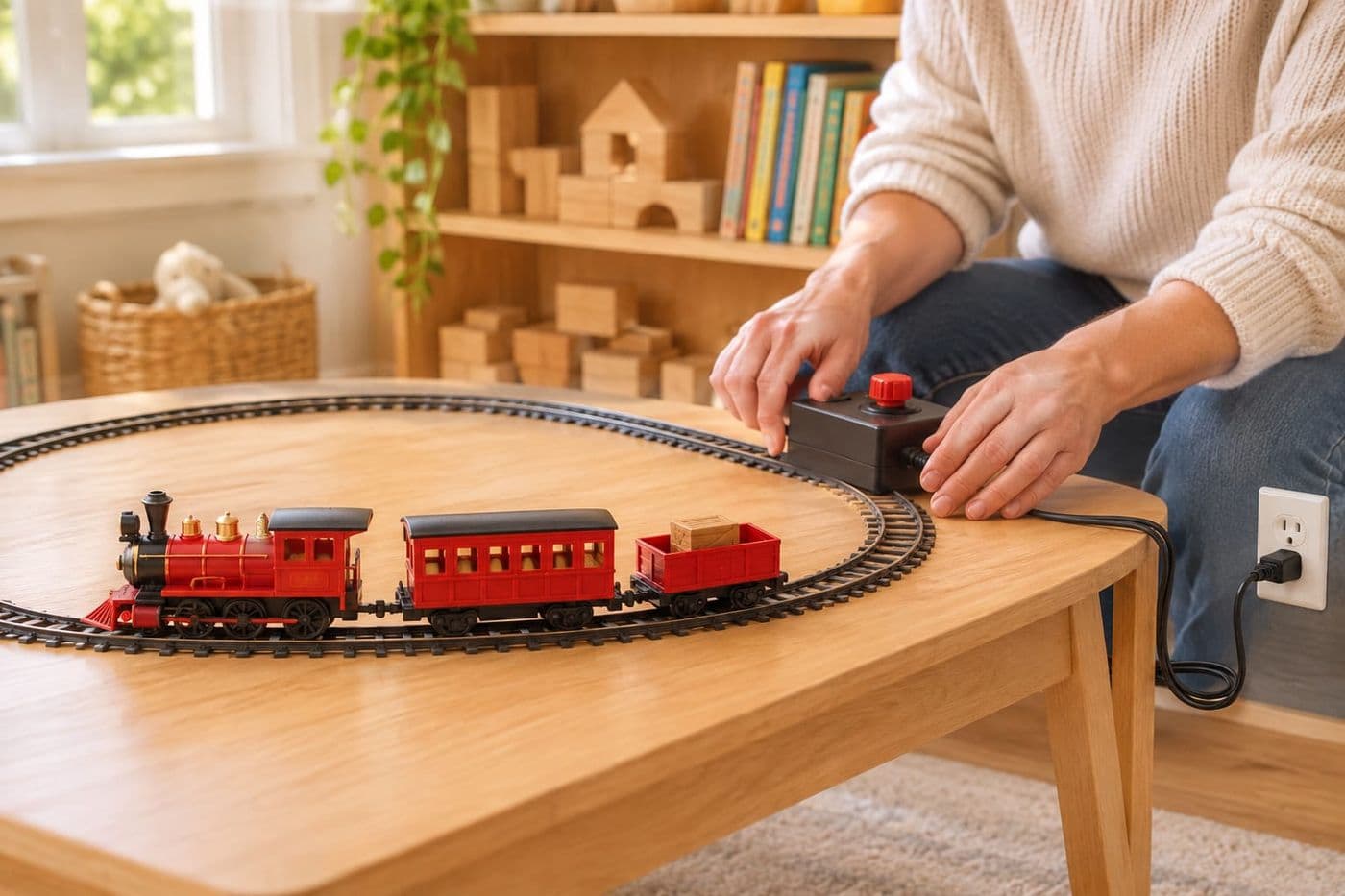
The CPSC says electric toys and other electrically operated products for children can be extremely hazardous. That is true if they are used the wrong way or without supervision. It is also true if they are not properly designed or built.
The CPSC lists many possible dangers. These affect children and the adults who buy and watch over their toys.
What Is the Hazard?
According to the CPSC, the dangers include electric shock and burns. Burns are a special concern when a toy has a heating element. Electric toys can also have the mechanical hazards common to toys in general, such as sharp edges and points and dangerous moving parts.
In 1973, the CPSC issued safety regulations for electrically operated toys made to run on 110-125 volt branch circuits. The rules cover how these toys are made and how they must perform. They also require cautionary labels on both the toy and its shelf package. The CPSC says these standards and rules have reduced the risk of injury. It also says adults must still choose toys with care, supervise play, inspect toys from time to time, and repair, replace or discard toys that are wearing out.
What the CPSC Says Toy Rules Require
The CPSC says all electric toys must meet its rules to be sold in the U.S. Some examples:
- Live electrical parts must be enclosed so they cannot be opened with common tools such as a screwdriver or pliers. Replaceable light bulb housings are not covered by this.
- Plugs must have a finger or thumb grip and a safety shield to protect small fingers from energized prongs.
- Moving parts that could be hazardous must be enclosed or guarded.
- Toys with pressurized enclosures, such as steam chambers, must have an automatic pressure-relief valve.
- Toys must stay within maximum surface temperature limits.
The package of every such product must carry a cautionary message and a minimum age recommendation. No item with a heating element may be recommended for children under 8 years of age. Some hobby items, such as wood burning kits, reach very high temperatures. They cannot be recommended for children under 12 years of age and should be kept out of their reach.
What Should You Do?
- Check the age recommendation on the shelf package. It is a minimum age. Do not buy an electric toy for a child too young to use it safely. A label such as "Not Recommended for Children under 8 Years of Age" does not mean every 8-year-old is ready. Think about the individual child.
- Read the instructions carefully. Then read them with any child who will use the toy. Make sure the child understands the instructions and warning labels and knows the hazards of misusing the toy.
- Keep the instructions with the toy or in a safe place where they are easy to find.
- Supervise the use of any electrical product. The CPSC says how much supervision is needed is a matter of judgment. Consider the child's maturity and the kind of toy.
- Make sure the plug fits snugly into wall outlets or extension cord receptacles. No prongs should be exposed.
- Teach children to unplug a toy by grasping the plug, not by pulling on the cord.
- Keep infants and toddlers out of the area where an electric toy is being used.
- Put electric toys away right after use. Store them in a dry place out of reach of younger children.
- Check toys from time to time. Look for broken parts, frayed cords and damage to the enclosures around wiring and other protected parts.
- Let only an adult or a responsible older child change a light bulb on an electric toy. Use a bulb of the proper wattage and unplug the toy first.
- Discard right away any toy that is so badly damaged it cannot be properly repaired.
- Plug electric toys into GFCI-protected circuits when they are in use. The CPSC says a GFCI (Ground Fault Circuit Interrupter) will prevent many electrocutions.
- If you have a toy you think does not meet the CPSC requirements, call the CPSC at (800) 638-2772.
Source:https://www.cpsc.gov/safety-education/safety-guides/toys/electric-toy-safety