
The CPSC warns that people can be electrocuted when they use ladders near overhead wires. The CPSC is aware of 15 non-work-related electrocution deaths involving consumers between 2000 and 2009. In each case, someone used a ladder that touched an electrical wire around the home.
Homeowners may use ladders to clean gutters, paint, trim trees and repair roofs and chimneys. The CPSC says many overhead power lines are not insulated.
What Is the Hazard?
Metal ladders can conduct electricity. So can wood ladders with metal reinforcement wire. The CPSC says this can shock or kill anyone touching the ladder or touching someone who is in contact with it.
The CPSC says electrocutions can happen in two main ways:
- A person moves a ladder and it accidentally touches an overhead wire near the house or street.
- The ladder shifts. Wind, uneven ground or reaching to the side while on the ladder can cause the ladder or the person to touch an overhead wire.
Metal, wood and fiberglass stepladders and extension ladders that meet American National Standards Institute (ANSI) voluntary standards carry labels about this hazard. The label reads: Danger! Electrocution Hazard. Keep ladder away from power lines and live electrical wires. The CPSC says electrocutions still occur each year despite these warnings.
What Should You Do?
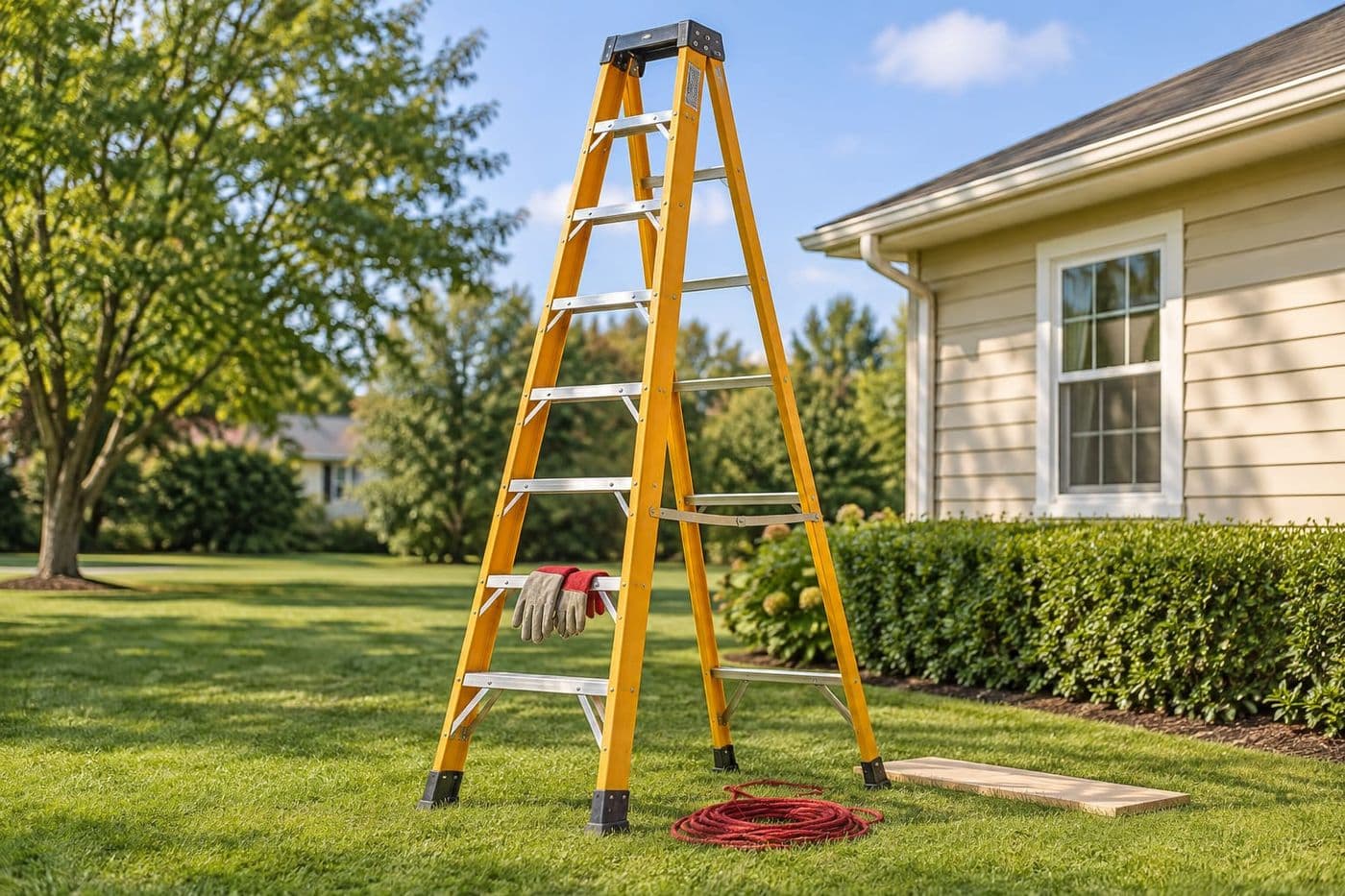
The CPSC advises using a ladder that does not conduct electricity when you work near overhead wires. An example is a fiberglass ladder with non-conductive side rails. Keep non-conductive ladders clean so they keep their safety properties.
If you must use a metal or wood ladder, the CPSC says to follow these steps:
- Make sure the ladder is clean and dry.
- Check the location of all overhead wires before you use the ladder. Any power line, including the line from the street to your house, can let electricity flow into a piece of metal or another object that touches it, such as a wet tree branch. Power lines and phone lines often look alike. Assume all overhead wires carry electricity. Some power lines have a coating to extend the life of the line. The coating is not meant to protect against electrocution.
- Lower the ladder when you carry or move it so it does not touch an overhead wire. Long ladders can be unwieldy, so have someone help you carry and set up the ladder.
- Never work on a windy day. A gust of wind can make the ladder shift and touch an overhead wire.
- Never place a ladder where it could slide into an overhead line. Keep the distance to the nearest overhead line at least twice the length of the ladder.
- Place the ladder's feet on solid and level ground before you climb. If the ground is not level or is soft, put a flat piece of wood under one or both feet of the ladder to make a solid and level base. If possible, tie off the ladder so it cannot move. Keep wood ladders clean and dry to reduce the chance of electrical conductivity.
- If the ladder starts to fall into an overhead line, let it go. Never try to move it. Do not leave the ladder unattended, so no one touches it without knowing the danger. Have someone call the power company and ask them to cut off electricity to the line before you move the ladder. If someone is holding the ladder when it touches the line, never try to pull them away with your hands. Use something that does not conduct electricity, such as a long piece of dry wood or rope, to push or pull them loose.