
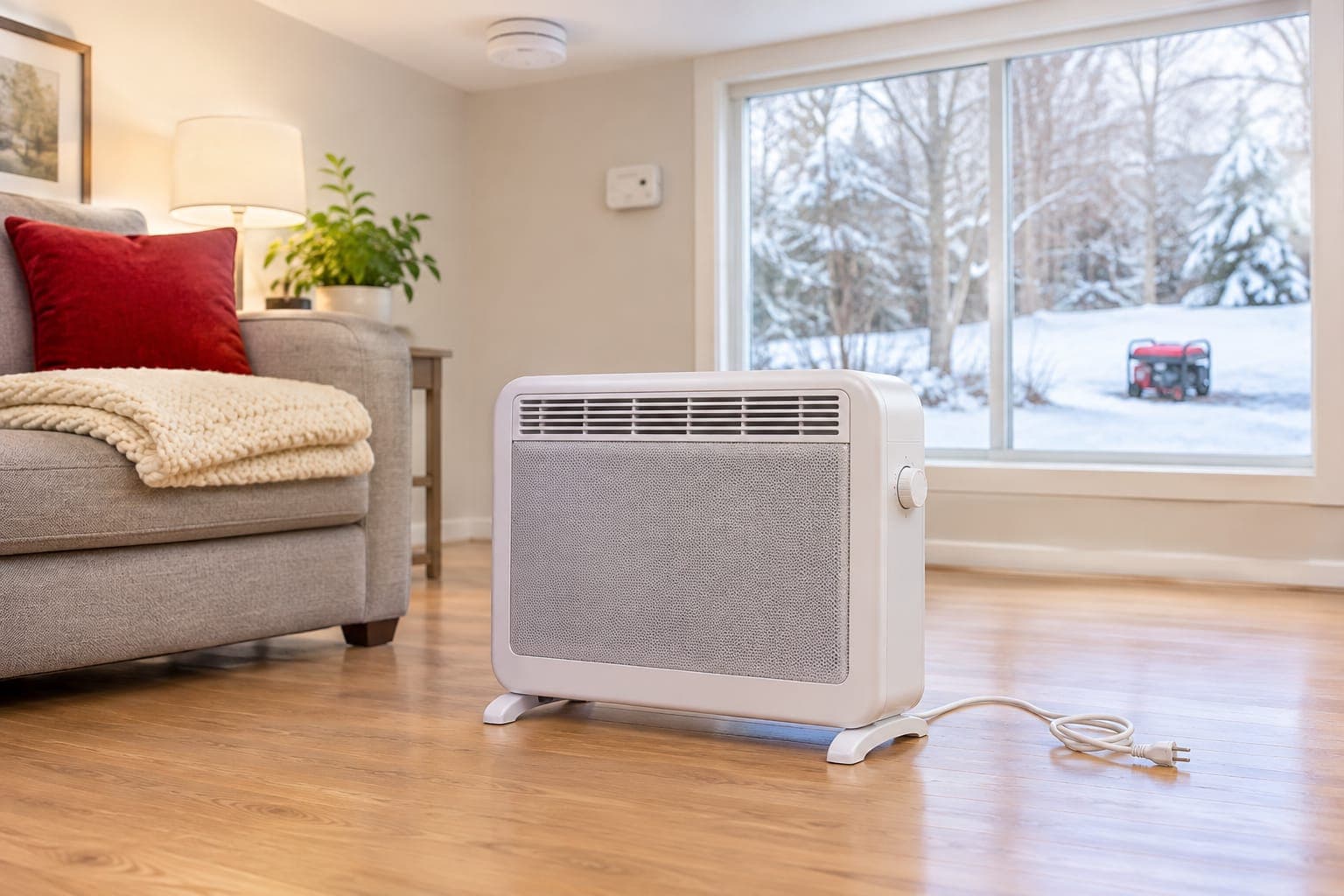
Cold weather and power outages send many families looking for extra heat. The CPSC warns that this can bring two serious dangers into the home: fires and carbon monoxide (CO) poisoning. CPSC estimates that portable heaters, including electric space heaters, are involved in an average of 1,600 fires per year. From 2020 to 2022, those fires resulted in an average of 70 deaths and 150 injuries annually.
Portable generators are a second concern. According to the CPSC's latest report on non-fire carbon monoxide deaths linked to consumer products, an average of about 100 consumers die in the U.S. each year from CO poisoning from portable generators. This guide covers what the CPSC says to do before the next cold snap or storm.
What Is the Hazard?
Carbon monoxide can kill in minutes. The CPSC calls CO the "invisible killer" because it is colorless and odorless. The CPSC says poisoning from gasoline-powered portable generators can happen so quickly that exposed people may become unconscious before they notice symptoms such as nausea, dizziness or weakness. The CPSC says gasoline-powered generators used during winter power outages can produce as much CO as hundreds of cars. CPSC estimates that from 2012 to 2022, about 750 people died from CO poisoning associated with generators alone.
Fire is the other hazard. The CPSC says improper use of portable generators and other fuel-burning devices during power outages can be deadly. It also warns about fire and CO risks linked to home heating equipment, including space heaters, furnaces and fireplaces.
What Should You Do?
- Place portable generators outside. The CPSC's winter safety infographic says to keep them at least 20 feet away from windows, doors and vents. CPSC news releases say to keep a generator at least 20 feet from the house and to point the exhaust away from any nearby building.
- Never use a generator in a basement, shed or garage. CPSC news releases add that a generator should never run inside a home, a crawlspace or any other enclosed space. The CPSC says opening doors or windows will not provide enough ventilation to prevent the buildup of lethal levels of CO.
- Have working carbon monoxide alarms in your home. The CPSC says CO alarms should be placed on every level of the home and outside sleeping areas. It says interconnected alarms are best.
- Give space heaters space. The CPSC says to place space heaters 3 feet away from flammable materials.
- Install smoke alarms on every floor and in every bedroom, according to the CPSC infographic.
- Test your smoke alarms to make sure they work. The CPSC infographic says to replace the batteries once a year. Separately, CPSC news releases say to test CO and smoke alarms monthly and replace batteries if needed.
- Never ignore an alarm when it sounds. The CPSC says to get outside immediately and then call 911.
- Never leave burning candles unattended, the CPSC says.
- Check for recalls. The CPSC says to see whether household products have been recalled before you use them, any time of the year, at cpsc.gov/recalls.
- Report an unsafe product at SaferProducts.gov. You can also call the CPSC hotline at 800-638-2772 (TTY 800-638-8270).
Source:https://www.cpsc.gov/Safety-Education/Safety-Guides/General-Information/Winter-Safety