FDA Alerts

Recent Alerts

Rotten Mango: The Mom Who Hunted Cartel Killers

Rotten Mango: The Mom Who Hunted Cartel Killers

A grieving mother goes after her daughter's killers herself. Rotten Mango #369 tells the real-life 'Taken'.

Morbid: H.H. Holmes Part 1, the Original American Monster

Morbid: H.H. Holmes Part 1, the Original American Monster

A Chicago "castle," a charming doctor, and a trail of missing guests. Start Morbid's H.H. Holmes.

Don't F**k with Cats: Sleuths vs. a Killer

Don't F**k with Cats: Sleuths vs. a Killer

Internet sleuths hunt a killer from their keyboards. Stream the Netflix hit tonight.

Casefile: Three Beaumont Children Vanish From a Beach

Casefile: Three Beaumont Children Vanish From a Beach

Adelaide, 1966. Three siblings walked to the beach and never came home. Casefile Case 100 retells it.

My Favorite Murder: Christa Worthington and Typhoid Mary

My Favorite Murder: Christa Worthington and Typhoid Mary

A Cape Cod mother, a notorious cook, and two stories you can't unhear. Start MFM 105 tonight.

logo
  • Crime Alerts
  • CDC Alerts
  • FDA Alerts
  • Get Alerts
  • True Crime
  • Recalls
  • Crime Alerts
  • CDC Alerts
  • FDA Alerts
  • Get Alerts
  • True Crime
  • Recalls

FDA: Fragrances in Cosmetics

Many products we use every day contain fragrances. Some of these products are regulated as cosmetics by FDA. Some belong to other product categories and are regulated differently, depending on how the product is intended to be used. Here is information about fragrances that people often ask about:

How to Know If a Fragrance Product Is Regulated as a Cosmetic

If a product is intended to be applied to a person’s body to make the person more attractive, it’s a cosmetic under the law. Here are some examples of fragrance products that are regulated as cosmetics: 

  • Perfume
  • Cologne
  • Aftershave 

Fragrance ingredients are also commonly used in other products, such as shampoos, shower gels, shaving creams, and body lotions. Even some products labeled “unscented” may contain fragrance ingredients. This is because the manufacturer may add just enough fragrance to mask the unpleasant smell of other ingredients, without giving the product a noticeable scent. 

Some fragrance products that are applied to the body are intended for therapeutic uses, such as treating or preventing disease, or affecting the structure or function of the body. Products intended for this type of use are treated as drugs under the law, or sometimes as both cosmetics and drugs. Here are some examples of labeling statements that will cause a product containing fragrances to be treated as a drug:

  • Easing muscle aches
  • Soothing headaches
  • Helping people sleep
  • Treating colic 

Many other products that may contain fragrance ingredients, but are not applied to the body, are regulated by the Consumer Product Safety Commission. Here are some examples: 

  • Laundry detergents
  • Fabric softeners
  • Dryer sheets
  • Room fresheners
  • Carpet fresheners  

Statements on labels, marketing claims, consumer expectations, and even some ingredients may determine a product’s intended use. To learn more about the differences, including the different requirements, see “Is it a Cosmetic, a Drug, or Both? (or Is It a Soap).” 

“Essential Oils” and “Aromatherapy”

There is no regulatory definition for “essential oils,” although people commonly use the term to refer to certain oils extracted from plants. The law treats Ingredients from plants the same as those from any other source. 

For example, “essential oils” are commonly used in so-called “aromatherapy” products. If an “aromatherapy” product is intended to treat or prevent disease, or to affect the structure or function of the body, it’s a drug. To learn more, see “Aromatherapy.”

Similarly, a massage oil intended to lubricate the skin is a cosmetic. But if claims are made that a massage oil relieves aches or relaxes muscles, apart from the action of the massage itself, it’s a drug, or possibly both a cosmetic and a drug. 

Safety Requirements

Fragrance ingredients in cosmetics must meet the same requirement for safety as other cosmetic ingredients. The law does not require FDA approval before they go on the market, but they must be safe for consumers when they are used according to labeled directions, or as people customarily use them. Companies and individuals who manufacture or market cosmetics have a legal responsibility for ensuring that their products are safe and properly labeled. To learn more, see “FDA Authority Over Cosmetics.” 

Labeling of Fragrance Ingredients

If a cosmetic is marketed on a retail basis to consumers, such as in stores, on the Internet, or person-to-person, it must have a list of ingredients. In most cases, each ingredient must be listed individually. But under U.S. regulations, fragrance and flavor ingredients can be listed simply as “Fragrance” or “Flavor.”

Here’s why: FDA requires the list of ingredients under the Fair Packaging and Labeling Act (FPLA). This law is not allowed to be used to force a company to tell “trade secrets.” Fragrance and flavor formulas are complex mixtures of many different natural and synthetic chemical ingredients, and they are the kinds of cosmetic components that are most likely to be “trade secrets.” To learn more, see the regulation on cosmetic ingredient labeling and the Federal Register notice for this regulation, which addresses “trade secrets” and the FPLA.

Fragrance Allergies and Sensitivities

Some individuals may be allergic or sensitive to certain ingredients in cosmetics, food, or other products, even if those ingredients are safe for most people. Some components of fragrance formulas may have a potential to cause allergic reactions or sensitivities for some people. 

FDA does not have the same legal authority to require allergen labeling for cosmetics as for food.  So, if you are concerned about fragrance sensitivities, you may want to choose products that are fragrance free, and check the ingredient list carefully. If consumers have questions, they may choose to contact the manufacturer directly. 

Phthalates as Fragrance Ingredients

Phthalates are a group of chemicals used in hundreds of products. The phthalate commonly used in fragrance products is diethyl phthalate, or DEP. DEP does not pose known risks for human health as it is currently used in cosmetics and fragrances. 

Source: https://www.fda.gov/cosmetics/cosmetic-ingredients/fragrances-cosmetics

Share This Alert

OR SHARE

Past Alerts & News

Romorgniz Six-Drawer Dressers Sold On Amazon Recalled Over Child Tip-Over Risk

CDC Health Alerts

Consumer Product Recalls

CPSC

Crime Alerts

FDA Alerts

14 October 2026

Post

Romorgniz Six-Drawer Dressers Sold On Amazon Recalled Over Child Tip-Over Risk

Romorgniz is recalling about 12,078 Romorgniz Six-Drawer Dressers because they are unstable if they are not anchored to the wall and can tip over onto childr......
Snow Peak Takibi Propane Fireplace Inserts Recalled After Lava Rocks Explode

CDC Health Alerts

Consumer Product Recalls

CPSC

Crime Alerts

FDA Alerts

14 October 2026

Post

Snow Peak Takibi Propane Fireplace Inserts Recalled After Lava Rocks Explode

Snow Peak USA, Inc. of Portland, Oregon, is recalling its Snow Peak Takibi Fireplace Propane Inserts and Lava Rocks because the lava rocks can ignite and exp......
Boat Engines Produce Enough Carbon Monoxide to Kill in Minutes. Here Is Where It Builds Up.

CDC Health Alerts

Consumer Product Recalls

CPSC

Crime Alerts

FDA Alerts

14 October 2026

Post

Boat Engines Produce Enough Carbon Monoxide to Kill in Minutes. Here Is Where It Builds Up.

Carbon monoxide poisoning is one of the leading causes of boating-related deaths in the United States — and unlike CO hazards in a home, boat CO can accumula......
Your Pool Heater Could Be Filling Your Backyard with a Gas That Kills in Minutes

CDC Health Alerts

Consumer Product Recalls

CPSC

Crime Alerts

FDA Alerts

14 October 2026

Post

Your Pool Heater Could Be Filling Your Backyard with a Gas That Kills in Minutes

Gas-powered pool heaters produce carbon monoxide as a byproduct of combustion — and the U.S. Consumer Product Safety Commission (CPSC) warns that a malfuncti......
Holiday Decorations Cause Thousands of House Fires Every Year. Here Is What the CPSC Says to Stop Doing.

CDC Health Alerts

Consumer Product Recalls

CPSC

Crime Alerts

FDA Alerts

14 October 2026

Post

Holiday Decorations Cause Thousands of House Fires Every Year. Here Is What the CPSC Says to Stop Doing.

Every holiday season, Americans decorate their homes with lights, greenery, candles, and ornaments — and every holiday season, thousands of those homes catch......
The Garage Door Safety Test Most Homeowners Have Never Performed That Could Save a Child’s Life

CDC Health Alerts

Consumer Product Recalls

CPSC

Crime Alerts

FDA Alerts

14 October 2026

Post

The Garage Door Safety Test Most Homeowners Have Never Performed That Could Save a Child’s Life

Automatic garage doors are one of the largest moving mechanical objects in any American home — and the U.S. Consumer Product Safety Commission (CPSC) warns t......
The Electric Ride-On Toy That Can Reach Speeds Fast Enough to Seriously Injure Your Child

CDC Health Alerts

Consumer Product Recalls

CPSC

Crime Alerts

FDA Alerts

14 October 2026

Post

The Electric Ride-On Toy That Can Reach Speeds Fast Enough to Seriously Injure Your Child

Powered ride-on toys — electric cars, motorcycles, scooters, and ATVs designed for children — are among the most popular gifts of any holiday season. They ar......
14,000 Candle Fires Every Year. Here Is What the CPSC Says You Must Know

CDC Health Alerts

Consumer Product Recalls

CPSC

Crime Alerts

FDA Alerts

14 October 2026

Post

December Is the Deadliest Month for Candle Fires. Most Victims Were Asleep When the Fire Started.

Candles bring warmth and beauty to the holiday season — and they also cause thousands of home fires every year, with December consistently producing the high......
One Child Dies Every Two Weeks When a TV or Piece of Furniture Tips Over. Is Yours Anchored?

CDC Health Alerts

Consumer Product Recalls

CPSC

Crime Alerts

FDA Alerts

14 October 2026

Post

One Child Dies Every Two Weeks When a TV or Piece of Furniture Tips Over. Is Yours Anchored?

One child dies every two weeks in the United States when a television, piece of furniture, or appliance tips over and falls on them — and the U.S. Consumer P......
Lil Pick Up Recalls 4,900 Rex110 And Sierra110 Youth ATVs After One Child’s Death

CDC Health Alerts

Consumer Product Recalls

CPSC

Crime Alerts

FDA Alerts

14 October 2026

Post

Snowmobiles and ATVs Kill Over 800 People in Three Years. Are You Making These Deadly Mistakes?

Off-highway vehicles — including all-terrain vehicles, snowmobiles, recreational off-highway vehicles, and utility terrain vehicles — kill hundreds of Americ......
FDA: Breast Cancer Screening – Thermogram No Substitute for Mammogram

CDC Health Alerts

Consumer Product Recalls

CPSC

Crime Alerts

FDA Alerts

14 October 2026

Post

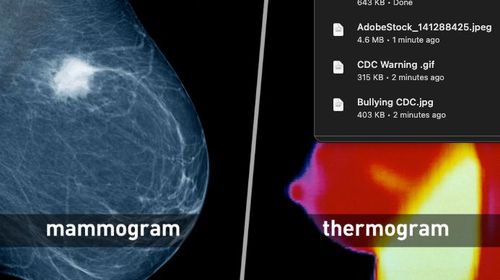
FDA: Breast Cancer Screening – Thermogram No Substitute for Mammogram

Proper breast cancer screening checks for cancer even before there may be signs and symptoms of the disease. Mammography (low-dose X-ray imaging of the breas......
CDC: Concussion Basics

CDC Health Alerts

Consumer Product Recalls

CPSC

Crime Alerts

FDA Alerts

14 October 2026

Post

CDC: Concussion Basics

Key points More Information Concussions are brain injuries A concussion is a type of traumatic brain injury—or TBI—caused by a bump, blow, or jolt to the hea......
FDA: Medical Device Cybersecurity – What You Need to Know

CDC Health Alerts

Consumer Product Recalls

CPSC

Crime Alerts

FDA Alerts

14 October 2026

Post

FDA: Medical Device Cybersecurity – What You Need to Know

Pacemakers, insulin pumps and other medical devices are becoming more advanced. Most contain software and connect to the internet, hospital networks, your mo......
CDC: About Intimate Partner Violence

CDC Health Alerts

Consumer Product Recalls

CPSC

Crime Alerts

FDA Alerts

14 October 2026

Post

CDC: About Intimate Partner Violence

Key points Overview Intimate partner violence (IPV) is abuse or aggression that occurs in a romantic relationship. Intimate partner refers to both current an......
FDA: Issued Warning About Imported Cookware

CDC Health Alerts

Consumer Product Recalls

CPSC

Crime Alerts

FDA Alerts

14 October 2026

Post

FDA: Issued Warning About Imported Cookware

What’s the Problem? The U.S. Food and Drug Administration (FDA) is warning retailers and consumers not to sell or use certain imported cookware that may leac......
Terms and ConditionsDo Not Sell or Share My Personal InformationPrivacy PolicyPrivacy NoticeAccessibility NoticeUnsubscribe
This website is an independent platform that provides information and services related to health, wellness, and safety. We rely on publicly available information to provide accurate and up-to-date information to our users. However, we are not affiliated with any government entity, and the information provided on this website is for general informational purposes only. We do not guarantee the accuracy, completeness, or usefulness of any information provided on this website. Any reliance you place on such information is strictly at your own risk. We are not responsible for any loss or damage arising from your use of this website or any information contained herein. Furthermore, the information provided on this website is not intended to be a substitute for professional medical advice, diagnosis, or treatment. Always seek the advice of a qualified healthcare provider with any questions you may have regarding a medical condition. Finally, any product or service mentioned on this website is not intended to diagnose, treat, cure, or prevent any disease.
Copyright © 2026 Emergency Message System