FDA Alerts

Recent Alerts

Rotten Mango: The Mom Who Hunted Cartel Killers

Rotten Mango: The Mom Who Hunted Cartel Killers

A grieving mother goes after her daughter's killers herself. Rotten Mango #369 tells the real-life 'Taken'.

Morbid: H.H. Holmes Part 1, the Original American Monster

Morbid: H.H. Holmes Part 1, the Original American Monster

A Chicago "castle," a charming doctor, and a trail of missing guests. Start Morbid's H.H. Holmes.

Don't F**k with Cats: Sleuths vs. a Killer

Don't F**k with Cats: Sleuths vs. a Killer

Internet sleuths hunt a killer from their keyboards. Stream the Netflix hit tonight.

Casefile: Three Beaumont Children Vanish From a Beach

Casefile: Three Beaumont Children Vanish From a Beach

Adelaide, 1966. Three siblings walked to the beach and never came home. Casefile Case 100 retells it.

My Favorite Murder: Christa Worthington and Typhoid Mary

My Favorite Murder: Christa Worthington and Typhoid Mary

A Cape Cod mother, a notorious cook, and two stories you can't unhear. Start MFM 105 tonight.

logo
  • Crime Alerts
  • CDC Alerts
  • FDA Alerts
  • Get Alerts
  • True Crime
  • Recalls
  • Crime Alerts
  • CDC Alerts
  • FDA Alerts
  • Get Alerts
  • True Crime
  • Recalls

FDA: How AEDs in Public Places Can Restart Hearts

Sudden cardiac arrest occurs when the heart suddenly and unexpectedly stops pumping blood. It can happen to anyone, at any time, and signs include sudden collapse and immediate loss of consciousness.

Unlike heart attacks, which are caused by a blockage in an artery to the heart, sudden cardiac arrest is caused when the heart’s electrical system malfunctions. This produces abnormal heart rhythms, called arrhythmias, that make the heart unable to pump blood.

If cardiac arrest does occur, rapid treatment with a medical device called an automated external defibrillator (AED) can be lifesaving.

An AED is a type of computerized defibrillator that automatically analyzes the heart rhythm in people who are experiencing cardiac arrest. When appropriate, it delivers an electrical shock to the heart to restore its normal rhythm.  The conversion of a ventricular arrhythmia to its normal rhythm by an electrical shock is called defibrillation.

Defibrillation is time sensitive. The probability of survival decreases by 7% to 10% for every minute that a victim stays in a life-threatening arrhythmia.

The U.S. Food and Drug Administration regulates AEDs and their necessary accessories as medical devices and evaluates them for safety and effectiveness before they are marketed.

Many AEDs Are in Plain Sight

You can find AEDs in many public places, including offices, schools, shopping malls, grocery stores, and airports.

Emergency first-responders are typically equipped with and trained to use AEDs. Some people with underlying cardiac conditions can be at a higher risk of sudden cardiac arrest. Your health care professional can tell you if a home AED is something you should consider.

How AEDs Work

An AED system includes an AED and its necessary accessories, such as a battery, pad electrodes, and if applicable, an adapter. The AED gives verbal instructions to users.

This is how they work:

  • The user turns on the AED and follows the voice prompts. Some AEDs turn on automatically when the user opens the lid.
  • The user attaches two sticky pads with sensors (called electrodes) on the chest of the person in cardiac arrest.
  • The electrodes send information about the person’s heart rhythm to a processor in the AED, which then analyzes the rhythm to find out whether an electric shock is needed.
  • If a defibrillation shock is needed, the AED uses the voice prompts to instruct when to press a button to deliver the shock. In some AEDs, the voice prompts announce that a shock is going to be delivered and the AED delivers the shock without intervention by the user.

Training to Use AEDs

AEDs are not difficult to use, but training in the use of AEDs is highly recommended. This training, in connection with CPR training, is offered by many major health organizations. Some training is available online.

Classes can teach you how to recognize the signs of a sudden cardiac arrest, when to call emergency medical services, how to do CPR, and how to use an AED.

But as always, in an emergency, call 911 immediately. If you’re somewhere that has an emergency response system that includes a clearly visible number, call that number for assistance. In either case, an operator can give instructions on how you can help someone who has sudden cardiac arrest.

How the FDA Regulates AEDs

The FDA reviews AEDs and their necessary accessories, such as batteries and pad electrodes, for safety and effectiveness. As part of its regulatory oversight, the FDA closely monitors reports of device malfunctions, and reviews such reports from consumers and manufacturers of AEDs.

Although the FDA regulates AEDs as medical devices, it does not regulate the resuscitation guidelines for the use of these devices. Visit this American Red Cross website to learn how and when to use an AED.

The FDA maintains a list of FDA-approved AEDs and FDA-approved AED accessories. Certain AEDs that do not appear on the FDA-approved list are considered “legacy devices.” Although some of these legacy devices are still in use, they may no longer be legally marketed.

If you own an AED system, check to make sure your AED and its accessories are FDA approved. Contact the AED manufacturer with any questions or concerns. For more information, please visit the FDA webpage, Automated External Defibrillators.

Given the importance of these devices in emergency situations, the FDA recommends you continue to keep such legacy AEDs available for use until you receive an FDA-approved AED.  If a cardiac arrest emergency happens and an AED is available, know that AEDs, even those considered legacy devices, can save lives.

The potential lifesaving benefits of FDA-approved AEDs when used as intended outweigh the probable risks of using them, when accompanied by adequate directions and appropriate warnings. You should be confident in using these devices in life-threatening situations.

Source: https://www.fda.gov/consumers/consumer-updates/how-aeds-public-places-can-restart-hearts

Share This Alert

OR SHARE

Past Alerts & News

Romorgniz Six-Drawer Dressers Sold On Amazon Recalled Over Child Tip-Over Risk

CDC Health Alerts

Consumer Product Recalls

CPSC

Crime Alerts

FDA Alerts

14 October 2026

Post

Romorgniz Six-Drawer Dressers Sold On Amazon Recalled Over Child Tip-Over Risk

Romorgniz is recalling about 12,078 Romorgniz Six-Drawer Dressers because they are unstable if they are not anchored to the wall and can tip over onto childr......
Snow Peak Takibi Propane Fireplace Inserts Recalled After Lava Rocks Explode

CDC Health Alerts

Consumer Product Recalls

CPSC

Crime Alerts

FDA Alerts

14 October 2026

Post

Snow Peak Takibi Propane Fireplace Inserts Recalled After Lava Rocks Explode

Snow Peak USA, Inc. of Portland, Oregon, is recalling its Snow Peak Takibi Fireplace Propane Inserts and Lava Rocks because the lava rocks can ignite and exp......
Boat Engines Produce Enough Carbon Monoxide to Kill in Minutes. Here Is Where It Builds Up.

CDC Health Alerts

Consumer Product Recalls

CPSC

Crime Alerts

FDA Alerts

14 October 2026

Post

Boat Engines Produce Enough Carbon Monoxide to Kill in Minutes. Here Is Where It Builds Up.

Carbon monoxide poisoning is one of the leading causes of boating-related deaths in the United States — and unlike CO hazards in a home, boat CO can accumula......
Your Pool Heater Could Be Filling Your Backyard with a Gas That Kills in Minutes

CDC Health Alerts

Consumer Product Recalls

CPSC

Crime Alerts

FDA Alerts

14 October 2026

Post

Your Pool Heater Could Be Filling Your Backyard with a Gas That Kills in Minutes

Gas-powered pool heaters produce carbon monoxide as a byproduct of combustion — and the U.S. Consumer Product Safety Commission (CPSC) warns that a malfuncti......
Holiday Decorations Cause Thousands of House Fires Every Year. Here Is What the CPSC Says to Stop Doing.

CDC Health Alerts

Consumer Product Recalls

CPSC

Crime Alerts

FDA Alerts

14 October 2026

Post

Holiday Decorations Cause Thousands of House Fires Every Year. Here Is What the CPSC Says to Stop Doing.

Every holiday season, Americans decorate their homes with lights, greenery, candles, and ornaments — and every holiday season, thousands of those homes catch......
The Garage Door Safety Test Most Homeowners Have Never Performed That Could Save a Child’s Life

CDC Health Alerts

Consumer Product Recalls

CPSC

Crime Alerts

FDA Alerts

14 October 2026

Post

The Garage Door Safety Test Most Homeowners Have Never Performed That Could Save a Child’s Life

Automatic garage doors are one of the largest moving mechanical objects in any American home — and the U.S. Consumer Product Safety Commission (CPSC) warns t......
The Electric Ride-On Toy That Can Reach Speeds Fast Enough to Seriously Injure Your Child

CDC Health Alerts

Consumer Product Recalls

CPSC

Crime Alerts

FDA Alerts

14 October 2026

Post

The Electric Ride-On Toy That Can Reach Speeds Fast Enough to Seriously Injure Your Child

Powered ride-on toys — electric cars, motorcycles, scooters, and ATVs designed for children — are among the most popular gifts of any holiday season. They ar......
14,000 Candle Fires Every Year. Here Is What the CPSC Says You Must Know

CDC Health Alerts

Consumer Product Recalls

CPSC

Crime Alerts

FDA Alerts

14 October 2026

Post

December Is the Deadliest Month for Candle Fires. Most Victims Were Asleep When the Fire Started.

Candles bring warmth and beauty to the holiday season — and they also cause thousands of home fires every year, with December consistently producing the high......
One Child Dies Every Two Weeks When a TV or Piece of Furniture Tips Over. Is Yours Anchored?

CDC Health Alerts

Consumer Product Recalls

CPSC

Crime Alerts

FDA Alerts

14 October 2026

Post

One Child Dies Every Two Weeks When a TV or Piece of Furniture Tips Over. Is Yours Anchored?

One child dies every two weeks in the United States when a television, piece of furniture, or appliance tips over and falls on them — and the U.S. Consumer P......
Lil Pick Up Recalls 4,900 Rex110 And Sierra110 Youth ATVs After One Child’s Death

CDC Health Alerts

Consumer Product Recalls

CPSC

Crime Alerts

FDA Alerts

14 October 2026

Post

Snowmobiles and ATVs Kill Over 800 People in Three Years. Are You Making These Deadly Mistakes?

Off-highway vehicles — including all-terrain vehicles, snowmobiles, recreational off-highway vehicles, and utility terrain vehicles — kill hundreds of Americ......
FDA: Breast Cancer Screening – Thermogram No Substitute for Mammogram

CDC Health Alerts

Consumer Product Recalls

CPSC

Crime Alerts

FDA Alerts

14 October 2026

Post

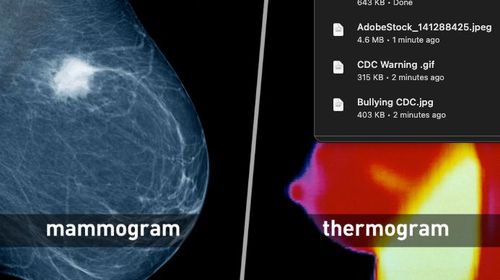
FDA: Breast Cancer Screening – Thermogram No Substitute for Mammogram

Proper breast cancer screening checks for cancer even before there may be signs and symptoms of the disease. Mammography (low-dose X-ray imaging of the breas......
CDC: Concussion Basics

CDC Health Alerts

Consumer Product Recalls

CPSC

Crime Alerts

FDA Alerts

14 October 2026

Post

CDC: Concussion Basics

Key points More Information Concussions are brain injuries A concussion is a type of traumatic brain injury—or TBI—caused by a bump, blow, or jolt to the hea......
FDA: Medical Device Cybersecurity – What You Need to Know

CDC Health Alerts

Consumer Product Recalls

CPSC

Crime Alerts

FDA Alerts

14 October 2026

Post

FDA: Medical Device Cybersecurity – What You Need to Know

Pacemakers, insulin pumps and other medical devices are becoming more advanced. Most contain software and connect to the internet, hospital networks, your mo......
CDC: About Intimate Partner Violence

CDC Health Alerts

Consumer Product Recalls

CPSC

Crime Alerts

FDA Alerts

14 October 2026

Post

CDC: About Intimate Partner Violence

Key points Overview Intimate partner violence (IPV) is abuse or aggression that occurs in a romantic relationship. Intimate partner refers to both current an......
FDA: Issued Warning About Imported Cookware

CDC Health Alerts

Consumer Product Recalls

CPSC

Crime Alerts

FDA Alerts

14 October 2026

Post

FDA: Issued Warning About Imported Cookware

What’s the Problem? The U.S. Food and Drug Administration (FDA) is warning retailers and consumers not to sell or use certain imported cookware that may leac......
Terms and ConditionsDo Not Sell or Share My Personal InformationPrivacy PolicyPrivacy NoticeAccessibility NoticeUnsubscribe
This website is an independent platform that provides information and services related to health, wellness, and safety. We rely on publicly available information to provide accurate and up-to-date information to our users. However, we are not affiliated with any government entity, and the information provided on this website is for general informational purposes only. We do not guarantee the accuracy, completeness, or usefulness of any information provided on this website. Any reliance you place on such information is strictly at your own risk. We are not responsible for any loss or damage arising from your use of this website or any information contained herein. Furthermore, the information provided on this website is not intended to be a substitute for professional medical advice, diagnosis, or treatment. Always seek the advice of a qualified healthcare provider with any questions you may have regarding a medical condition. Finally, any product or service mentioned on this website is not intended to diagnose, treat, cure, or prevent any disease.
Copyright © 2026 Emergency Message System