FDA Alerts

Recent Alerts

Rotten Mango: The Mom Who Hunted Cartel Killers

Rotten Mango: The Mom Who Hunted Cartel Killers

A grieving mother goes after her daughter's killers herself. Rotten Mango #369 tells the real-life 'Taken'.

Morbid: H.H. Holmes Part 1, the Original American Monster

Morbid: H.H. Holmes Part 1, the Original American Monster

A Chicago "castle," a charming doctor, and a trail of missing guests. Start Morbid's H.H. Holmes.

Don't F**k with Cats: Sleuths vs. a Killer

Don't F**k with Cats: Sleuths vs. a Killer

Internet sleuths hunt a killer from their keyboards. Stream the Netflix hit tonight.

Casefile: Three Beaumont Children Vanish From a Beach

Casefile: Three Beaumont Children Vanish From a Beach

Adelaide, 1966. Three siblings walked to the beach and never came home. Casefile Case 100 retells it.

My Favorite Murder: Christa Worthington and Typhoid Mary

My Favorite Murder: Christa Worthington and Typhoid Mary

A Cape Cod mother, a notorious cook, and two stories you can't unhear. Start MFM 105 tonight.

logo
  • Crime Alerts
  • CDC Alerts
  • FDA Alerts
  • Get Alerts
  • True Crime
  • Recalls
  • Crime Alerts
  • CDC Alerts
  • FDA Alerts
  • Get Alerts
  • True Crime
  • Recalls

FDA: Mammography: What You Need to Know

Mammograms continue to be the best primary tool for breast cancer screening. The U.S. Food and Drug Administration, along with some FDA-approved state certifying agencies, certify facilities to perform mammography. The FDA also clears, approves, and authorizes new mammography devices for sale in the U.S.

Congress enacted the Mammography Quality Standards Act (MQSA) in 1992 to ensure all women have access to quality mammography for the detection of breast cancer in its early, most treatable stages. Always look for the MQSA certificate at the mammography facility, which is required to be displayed and indicates that the facility meets the national baseline standards for mammography.

To continue to protect women’s health, the FDA has updated mammography regulations to, among other things, reflect advances in mammography technology and processes since the current regulations were published.

How Does a Mammogram Work?

A mammogram is a series of low-dose X-ray images of the breasts. Getting a regular mammogram is the best primary screening method to find breast cancer early, because it can show growths in the breast or other signs of breast cancer when they are too small for you or your health care provider to feel them.

Thermograms and nipple aspirate tests are not substitutes for mammograms. Regular screening mammograms are important, and the risk of developing breast cancers varies from person to person, so it’s a good idea to ask your health care provider when and how often you should schedule a mammogram.

To get a mammogram, you will need to take off your shirt and bra. While standing in front of the mammogram unit, a technologist will position your breast on a small platform. A clear plastic plate will press down on your breast while a mammogram image is acquired. This compression of the breast helps spread out the breast tissue so that it doesn’t overlap as much, allowing for a clearer look at the breast tissue.

If you’re worried about how the procedure feels, you should know that most women do not find it painful. Some women may find the pressure on the breast uncomfortable, but it usually lasts for only a few seconds.

The FDA’s regulations already require that facilities provide patients an easy-to-understand summary of their mammography results within 30 days after the mammogram, and that they make reasonable attempts to communicate the results as soon as possible if indications of potential cancer are found.

The FDA has amended the regulations to require that facilities also provide you with information about whether your breast tissue is dense or not dense. Dense breasts have a higher proportion of fibroglandular tissue compared to fatty tissue. This is important, because dense breast tissue can make cancers more difficult to find using a mammogram; and it is also now known to be an independent risk factor for developing breast cancer.

In addition, the FDA is requiring that facilities advise you to talk to your health care provider about breast density, risks for breast cancer, and your individual situation. The idea is to provide information you can discuss with your provider to make better informed decisions, including if you need to consider any next steps.

If you do not receive your mammography summary report, call the provider who sent you for the mammogram to get your results, and contact the facility where you had the mammogram performed to get the report resent to you.

Call your health care provider if you notice any change in either of your breasts. A lump, thickening of or leakage from the nipple, or changes in how the nipple or skin looks can signal a potential problem.

Why Is Facility Certification Important?

Under the MQSA, mammography facilities must be certified by the FDA, or an FDA-approved state certifying agency, to provide mammography services. Certification is important because it indicates that a facility has met the MQSA requirements for practicing quality mammography. A high-quality mammogram can help detect breast cancer in its earliest, most treatable stages.

Each mammography facility is inspected every year. During the inspection, an FDA or FDA-trained inspector checks the facility’s equipment, staff training qualifications, and quality control records. Each facility also undergoes an in-depth accreditation process every three years to be eligible for an MQSA certificate.

The certificate, which is required to be prominently displayed, shows that the facility has met the MQSA quality standards and may legally perform mammography. When you arrive for your mammogram, look for the certificate. If you don’t see it, ask for where the certificate is in the facility.

What Are 3D Mammograms?

Scientists at the FDA assess the performance of different breast imaging technologies.

New breast imaging equipment must receive the FDA’s approval, clearance, or authorization before being sold in the U.S. The FDA has approved digital breast tomosynthesis (known as DBT or 3D) advanced mammography devices that can create multiple cross-sectional images of the breast from X-rays taken from multiple angles. These devices provide informative images of the breast tissue and may be helpful in evaluating dense breast tissue.

Before granting approval, the FDA determined there was a reasonable assurance that the new 3D devices were safe and effective for their intended use. This determination was based on a review of clinical studies involving multiple radiologists and hundreds of cases. The FDA also sought input on the safety and effectiveness of the devices from a panel of non-FDA clinical and technical experts.

Where Is the Closest Certified Facility?

There are more than 8,600 MQSA-certified facilities across the country. To find a certified mammography facility in your area, you can search the list on the FDA’s website by your zip code. The list is updated weekly.

How Will the Changes to the MQSA Regulations Help You?

The updates to the MQSA regulations would, among additional changes:

  • Better inform you and your health care provider about your mammography results by providing specific information on breast density, an important risk factor for breast cancer.
  • Strengthen the FDA’s ability to suspend or revoke the certificates of facilities that are noncompliant with the regulations.
  • Require facilities to provide mammography personnel access to their own records of MQSA-qualifying training and experience upon their request, so they may continue to provide mammography services.

Source: https://www.fda.gov/consumers/consumer-updates/mammography-what-you-need-know

Share This Alert

OR SHARE

Past Alerts & News

Romorgniz Six-Drawer Dressers Sold On Amazon Recalled Over Child Tip-Over Risk

CDC Health Alerts

Consumer Product Recalls

CPSC

Crime Alerts

FDA Alerts

14 October 2026

Post

Romorgniz Six-Drawer Dressers Sold On Amazon Recalled Over Child Tip-Over Risk

Romorgniz is recalling about 12,078 Romorgniz Six-Drawer Dressers because they are unstable if they are not anchored to the wall and can tip over onto childr......
Snow Peak Takibi Propane Fireplace Inserts Recalled After Lava Rocks Explode

CDC Health Alerts

Consumer Product Recalls

CPSC

Crime Alerts

FDA Alerts

14 October 2026

Post

Snow Peak Takibi Propane Fireplace Inserts Recalled After Lava Rocks Explode

Snow Peak USA, Inc. of Portland, Oregon, is recalling its Snow Peak Takibi Fireplace Propane Inserts and Lava Rocks because the lava rocks can ignite and exp......
Boat Engines Produce Enough Carbon Monoxide to Kill in Minutes. Here Is Where It Builds Up.

CDC Health Alerts

Consumer Product Recalls

CPSC

Crime Alerts

FDA Alerts

14 October 2026

Post

Boat Engines Produce Enough Carbon Monoxide to Kill in Minutes. Here Is Where It Builds Up.

Carbon monoxide poisoning is one of the leading causes of boating-related deaths in the United States — and unlike CO hazards in a home, boat CO can accumula......
Your Pool Heater Could Be Filling Your Backyard with a Gas That Kills in Minutes

CDC Health Alerts

Consumer Product Recalls

CPSC

Crime Alerts

FDA Alerts

14 October 2026

Post

Your Pool Heater Could Be Filling Your Backyard with a Gas That Kills in Minutes

Gas-powered pool heaters produce carbon monoxide as a byproduct of combustion — and the U.S. Consumer Product Safety Commission (CPSC) warns that a malfuncti......
Holiday Decorations Cause Thousands of House Fires Every Year. Here Is What the CPSC Says to Stop Doing.

CDC Health Alerts

Consumer Product Recalls

CPSC

Crime Alerts

FDA Alerts

14 October 2026

Post

Holiday Decorations Cause Thousands of House Fires Every Year. Here Is What the CPSC Says to Stop Doing.

Every holiday season, Americans decorate their homes with lights, greenery, candles, and ornaments — and every holiday season, thousands of those homes catch......
The Garage Door Safety Test Most Homeowners Have Never Performed That Could Save a Child’s Life

CDC Health Alerts

Consumer Product Recalls

CPSC

Crime Alerts

FDA Alerts

14 October 2026

Post

The Garage Door Safety Test Most Homeowners Have Never Performed That Could Save a Child’s Life

Automatic garage doors are one of the largest moving mechanical objects in any American home — and the U.S. Consumer Product Safety Commission (CPSC) warns t......
The Electric Ride-On Toy That Can Reach Speeds Fast Enough to Seriously Injure Your Child

CDC Health Alerts

Consumer Product Recalls

CPSC

Crime Alerts

FDA Alerts

14 October 2026

Post

The Electric Ride-On Toy That Can Reach Speeds Fast Enough to Seriously Injure Your Child

Powered ride-on toys — electric cars, motorcycles, scooters, and ATVs designed for children — are among the most popular gifts of any holiday season. They ar......
14,000 Candle Fires Every Year. Here Is What the CPSC Says You Must Know

CDC Health Alerts

Consumer Product Recalls

CPSC

Crime Alerts

FDA Alerts

14 October 2026

Post

December Is the Deadliest Month for Candle Fires. Most Victims Were Asleep When the Fire Started.

Candles bring warmth and beauty to the holiday season — and they also cause thousands of home fires every year, with December consistently producing the high......
One Child Dies Every Two Weeks When a TV or Piece of Furniture Tips Over. Is Yours Anchored?

CDC Health Alerts

Consumer Product Recalls

CPSC

Crime Alerts

FDA Alerts

14 October 2026

Post

One Child Dies Every Two Weeks When a TV or Piece of Furniture Tips Over. Is Yours Anchored?

One child dies every two weeks in the United States when a television, piece of furniture, or appliance tips over and falls on them — and the U.S. Consumer P......
Lil Pick Up Recalls 4,900 Rex110 And Sierra110 Youth ATVs After One Child’s Death

CDC Health Alerts

Consumer Product Recalls

CPSC

Crime Alerts

FDA Alerts

14 October 2026

Post

Snowmobiles and ATVs Kill Over 800 People in Three Years. Are You Making These Deadly Mistakes?

Off-highway vehicles — including all-terrain vehicles, snowmobiles, recreational off-highway vehicles, and utility terrain vehicles — kill hundreds of Americ......
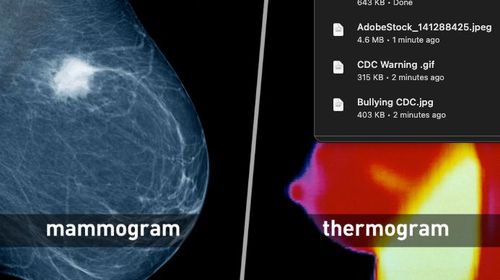
FDA: Breast Cancer Screening – Thermogram No Substitute for Mammogram

CDC Health Alerts

Consumer Product Recalls

CPSC

Crime Alerts

FDA Alerts

14 October 2026

Post

FDA: Breast Cancer Screening – Thermogram No Substitute for Mammogram

Proper breast cancer screening checks for cancer even before there may be signs and symptoms of the disease. Mammography (low-dose X-ray imaging of the breas......
CDC: Concussion Basics

CDC Health Alerts

Consumer Product Recalls

CPSC

Crime Alerts

FDA Alerts

14 October 2026

Post

CDC: Concussion Basics

Key points More Information Concussions are brain injuries A concussion is a type of traumatic brain injury—or TBI—caused by a bump, blow, or jolt to the hea......
FDA: Medical Device Cybersecurity – What You Need to Know

CDC Health Alerts

Consumer Product Recalls

CPSC

Crime Alerts

FDA Alerts

14 October 2026

Post

FDA: Medical Device Cybersecurity – What You Need to Know

Pacemakers, insulin pumps and other medical devices are becoming more advanced. Most contain software and connect to the internet, hospital networks, your mo......
CDC: About Intimate Partner Violence

CDC Health Alerts

Consumer Product Recalls

CPSC

Crime Alerts

FDA Alerts

14 October 2026

Post

CDC: About Intimate Partner Violence

Key points Overview Intimate partner violence (IPV) is abuse or aggression that occurs in a romantic relationship. Intimate partner refers to both current an......
FDA: Issued Warning About Imported Cookware

CDC Health Alerts

Consumer Product Recalls

CPSC

Crime Alerts

FDA Alerts

14 October 2026

Post

FDA: Issued Warning About Imported Cookware

What’s the Problem? The U.S. Food and Drug Administration (FDA) is warning retailers and consumers not to sell or use certain imported cookware that may leac......
Terms and ConditionsDo Not Sell or Share My Personal InformationPrivacy PolicyPrivacy NoticeAccessibility NoticeUnsubscribe
This website is an independent platform that provides information and services related to health, wellness, and safety. We rely on publicly available information to provide accurate and up-to-date information to our users. However, we are not affiliated with any government entity, and the information provided on this website is for general informational purposes only. We do not guarantee the accuracy, completeness, or usefulness of any information provided on this website. Any reliance you place on such information is strictly at your own risk. We are not responsible for any loss or damage arising from your use of this website or any information contained herein. Furthermore, the information provided on this website is not intended to be a substitute for professional medical advice, diagnosis, or treatment. Always seek the advice of a qualified healthcare provider with any questions you may have regarding a medical condition. Finally, any product or service mentioned on this website is not intended to diagnose, treat, cure, or prevent any disease.
Copyright © 2026 Emergency Message System